..a.k.a. God's Architect, Antoni Gaudí (born on June 25, 1852), learned architecture at a young age and attended school in Barcelona, the city that would become home to most of his great works. Gaudí was part of the Catalan Modernista movement, eventually transcending it with his nature-based organic style. Gaudí died on June 10, 1926.
Early Years
Antoni Gaudí was born in Catalonia on the Mediterranean coast of Spain in 1852. He showed an early interest in architecture, and in 1869 or 1870 he went to study in Barcelona, Spain’s most modern city at the time. After his studies were interrupted by military service, Gaudí graduated from the Provincial School of Architecture in 1878.
Upon graduation, Gaudí initially worked in the artistic vein of his Victorian predecessors, but he soon developed his own style, composing his works with juxtapositions of geometric masses and animating the surfaces with patterned brick or stone, bright ceramic tiles and floral or reptilian metalwork. The salamander in Park Güell, for instance, is representative of Gaudí’s work.
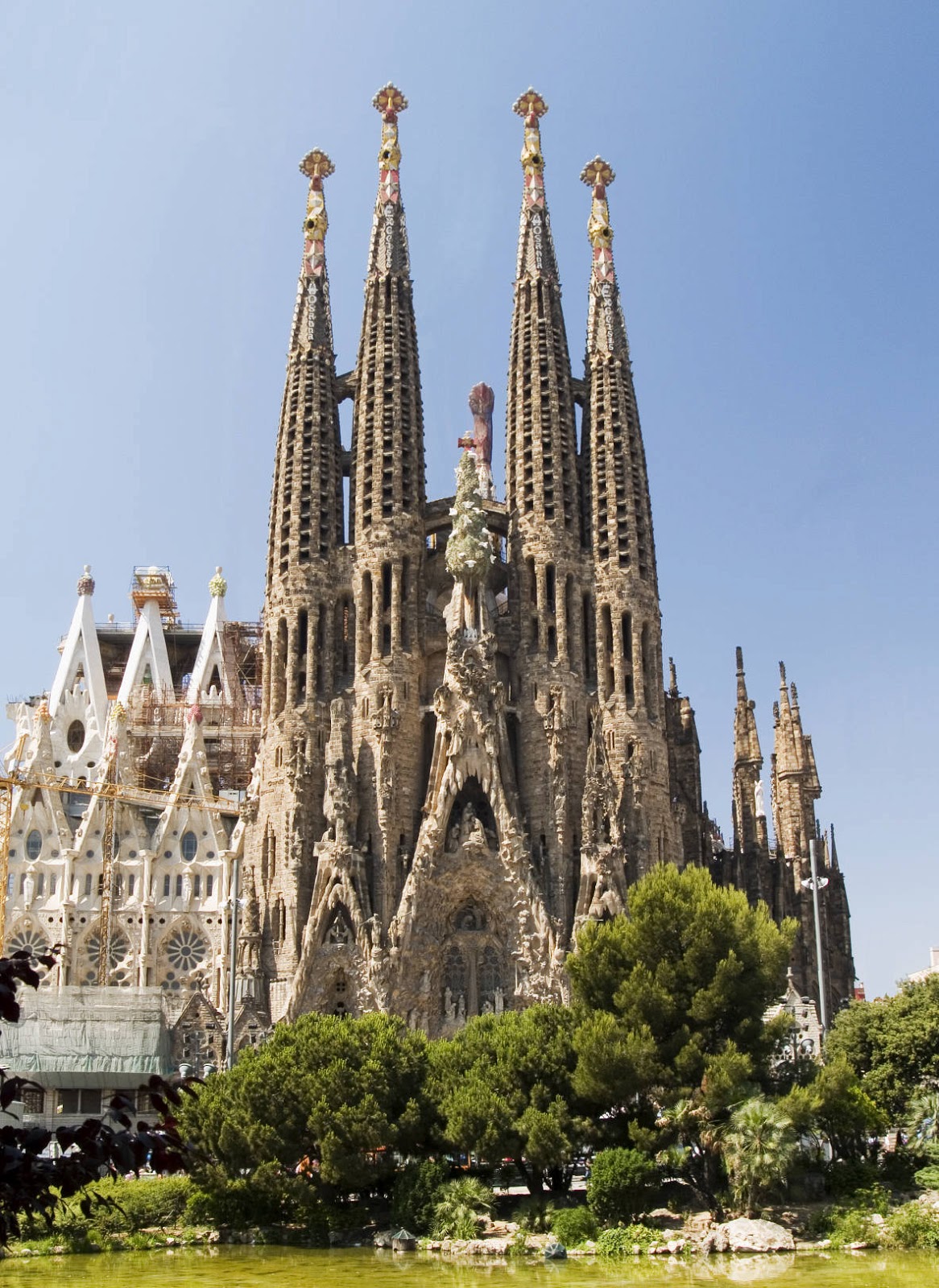
During his early period, at the Paris World's Fair of 1878, Gaudí displayed a showcase he had produced, which impressed one patron enough to lead to Gaudí’s working on the Güell Estate and Güell Palace, among others. In 1883, Gaudí was charged with the construction of a Barcelona cathedral called Basilica i Temple Expiatori de la Sagrada Familia (Basilica and Expiatory Church of the Holy Family). The plans had been drawn up earlier, and construction had already begun, but Gaudí completely changed the design, stamping it with his own distinctive style.
The Mature Artist
After 1902, Antoni Gaudí’s designs began to defy conventional stylistic classification, and he created a type of structure known as equilibrated—that is, it could stand on its own without internal bracing, external buttressing, etc. The primary functional elements of this system were columns that tilted to employ diagonal thrusts and lightweight tile vaults. Notably, Gaudí used his equilibrated system to construct two Barcelona apartment buildings: the Casa Batlló (1904–06) and the Casa Milà (1905–10), whose floors were structured like clusters of tile lily pads. Both projects are considered to be characteristic of Gaudí’s style.
Personal life
Gaudí devoted his life entirely to his profession, remaining single. He is only known to have been attracted to one woman—Josefa Moreu, teacher at the Mataró Cooperative, in 1884—but this was not reciprocated.Thereafter Gaudí took refuge in the profound spiritual peace his Catholic faith offered him. Gaudí is often depicted as unsociable and unpleasant, a man of gruff reactions and arrogant gestures. However, those who were close to him described him as friendly and polite, pleasant to talk to and faithful to friends.

Gaudí’s personal appearance—Nordic features, blond hair and blue eyes—changed radically over the course of time. As a young man, he dressed like a dandy in costly suits, sporting well-groomed hair and beard, indulging gourmet taste, making frequent visits to the theatre and the opera and visiting his project sites in a horse carriage. The older Gaudí ate frugally, dressed in old, worn-out suits, and neglected his appearance to the extent that sometimes he was taken for a beggar, such as after the accident that caused his death.
Death
Gaudí’s funeral (12 June 1926)
On 7 June 1926, Gaudí was taking his daily walk to the Sant Felip Neri church for his habitual prayer and confession. While walking along the Gran Via de les Corts Catalanes between Girona and Bailén streets, he was struck by a passing tram and lost consciousness.[48] Assumed to be a beggar because of his lack of identity documents and shabby clothing, the unconscious Gaudí did not receive immediate aid. Eventually a police officer transported him in a taxi to the Santa Creu Hospital, where he received rudimentary care.[49] By the time that the chaplain of the Sagrada Família, Mosén Gil Parés, recognised him on the following day, Gaudí's condition had deteriorated too severely to benefit from additional treatment. Gaudí died on 10 June 1926 at the age of 73 and was buried two days later. A large crowd gathered to bid farewell to him in the chapel of Our Lady of Mount Carmel in the crypt of the Sagrada Família. His gravestone bears this inscription:
Antonius Gaudí Cornet. Reusensis. Annos natus LXXIV, vitae exemplaris vir, eximiusque artifex, mirabilis operis hujus, templi auctor, pie obiit Barcinone die X Junii MCMXXVI, hinc cineres tanti hominis, resurrectionem mortuorum expectant. R.I.P.
RO:
.. A.k.a. Arhitect lui Dumnezeu, Antoni Gaudí (născut la 25 iunie 1852), a învățat arhitectura la o vârstă fragedă și a urmat școala în Barcelona, orașul care va deveni casa de cele mai multe dintre lucrările sale mari. Gaudi a fost parte a mișcării moderniste catalan, în cele din urmă depășind cu stilul său organic bazat pe natură. Gaudi a murit la 10 iunie 1926.
Primii ani
Antoni Gaudí a fost născut în Catalonia, pe coasta mediteraneană a Spaniei în 1852. El a arătat un interes timpuriu în arhitectură, și în 1869 sau 1870 el a mers să studieze în Barcelona, oras din Spania cel mai modern la acea vreme. După studiile sale au fost întrerupte de serviciul militar, Gaudi a absolvit Școala provincială de arhitectură în 1878.
La absolvire, Gaudi a lucrat inițial în venă artistic de predecesorii săi victoriene, dar el a dezvoltat repede propriul stil, compus operele sale cu juxtapuneri de mase geometrice și animarea suprafetele cu model caramida sau piatra, placi ceramice luminoase și metalice florale sau reptilian. Salamander in Parcul Guell, de exemplu, este reprezentant de munca lui Gaudi.
În perioada sa timpurie, la Targul de la Paris Mondiale de 1878, Gaudi afișat un exemplu el a produs, care a impresionat un patron suficient pentru a duce la lui Gaudi lucrează la Güell Estate și Güell Palace, printre altele. In 1883, Gaudi a fost acuzat de construirea unei catedrale Barcelona numit Bazilica i Templul Expiatori de la Sagrada Familia (Basilica și ispășitoare Biserica Sfânta Familie). Planurile au fost elaborate mai devreme, și de construcție au început deja, dar Gaudi a schimbat complet designul, ștampilarea cu stilul său distinctiv.
Artist matur
După 1902, modele Antoni Gaudí a început să sfideze clasificare stilistice convenționale, și a creat un tip de structură cunoscut sub numele de echilibrat, care este, s-ar putea sta pe cont propriu fara prelungitor interne, consolidarea, externe, etc Elementele funcționale principale ale acestui sistem au fost coloanele care înclinat să angajeze lovituri diagonale și bolți ușoare țiglă. În special, Gaudi a folosit sistemul său echilibrat pentru a construi două clădiri de apartamente Barcelona: Casa Batlló (1904-1906), iar Casa Milà (1905-1910), a cărui etaje au fost structurate ca grupuri de tampoane crin țiglă. Ambele proiecte sunt considerate a fi caracteristice stilului lui Gaudi.
Viața personală
Gaudi a dedicat viața în totalitate profesiei sale, rămas singur. El este cunoscut doar pentru a fi atras de o femeie profesor-Josefa Moreu, la Cooperativa Mataró, în 1884, dar acest lucru nu a fost reciprocated.Thereafter Gaudí s-au refugiat în pace spirituală profundă credința sa catolică i-au oferit. Gaudi este adesea descris ca nesociabil și neplăcut, un om de reacții aspru și gesturi arogant. Cu toate acestea, cei care s-au apropiat de el la descris ca fiind prietenos și politicos, plăcut să vorbesc cu și credincioși la prieteni.
Caracteristicile lui Gaudi personale aspect-nordice, păr blond și ochi albaștri-a schimbat radical de-a lungul timpului. Ca un tânăr, el a îmbrăcat ca un dandy în costume scumpe, sportive, par bine îngrijit și barbă, complac gust gastronomic, făcând vizite frecvente la teatru și la operă și vizitarea site-urile sale de proiect într-o căruță trasă de cai. Gaudi mai mâncat frugal, îmbrăcați în costume vechi, uzate, și a neglijat aspectul său în măsura în care, uneori, el a fost luat de un cerșetor, cum ar fi după accident care a cauzat moartea sa.
Moarte
Înmormântarea lui Gaudí (12 iunie 1926)
La 7 iunie 1926 Gaudi a fost plimbarea lui de zi cu zi la Sant Felip Neri biserica pentru rugaciune sa obișnuită și mărturisire. În timp ce mersul pe jos de-a lungul Gran Via de les Corts Catalanes între Girona și străzi Bailén, el a fost lovit de un tramvai care trece și-a pierdut cunoștința. [48] presupune a fi un cerșetor, din cauza lipsei sale de acte de identitate și haine ponosite, Gaudi a făcut inconștient nu primi ajutor imediat. În cele din urmă un ofițer de poliție l-au transportat într-un taxi la Spitalul Creu Mos Craciun, unde a primit ingrijiri medicale rudimentare. [49] Până în momentul în care preotul de Sagrada Familia, Mosen Gil Pares, l-au recunoscut în ziua următoare, starea lui Gaudi au deteriorat prea grav pentru a beneficia de tratament suplimentar. Gaudi a murit pe 10 iunie 1926, la vârsta de 73 de ani și a fost îngropat două zile mai târziu. O mare mulțime de oameni s-au adunat pentru a rămas bun de la el în Capela Maicii Domnului de pe Muntele Carmel în cripta de Sagrada Familia. Piatra sa funerară poartă inscripția aceasta:
Antonius Gaudí Cornet. Reusensis. Annos natus LXXIV, vitae exemplaris vir, eximiusque artifex, mirabilis operis hujus, templi auctor, pie obiit Barcinone die X Junii MCMXXVI, hinc cineres tanti hominis, resurrectionem mortuorum expectant. R.I.P.

.jpg)


.jpg)